Incoming Material Inspection
Fabric, trims, zippers, and labels are checked for shade, GSM, and faults before they enter production.

GenXport pairs multi-stage garment quality control with export compliance. We run inline and end-line inspection, AQL sampling, and defect classification, then back it with buyer-audit readiness, traceable documentation, and named certifications - for brands, clubs, and teams worldwide.
The two things buyers worry about most with overseas production - consistent quality and audit readiness - handled together by one accountable team.
GenXport is an apparel manufacturer that treats quality control and compliance as one system, not an afterthought. We run cutting, sewing, decoration, inspection, and export in-house, so every order is checked against your approved sample and documented from incoming fabric to final pack.
For importers, wholesalers, and brands doing due diligence, that means clear answers to the real questions: How is quality verified? How are defects caught and handled? Can the factory pass our buyer audit? This page lays out our quality control process, our compliance practices, and the certifications we work to.
We serve brands, clubs, and teams across the USA, UK, Europe, Australia, and beyond, with the USA as a priority served market - the same quality and compliance standard applies to every shipment, wherever it lands.
How is quality verified?
How are defects caught and handled?
Can the factory pass our buyer audit?
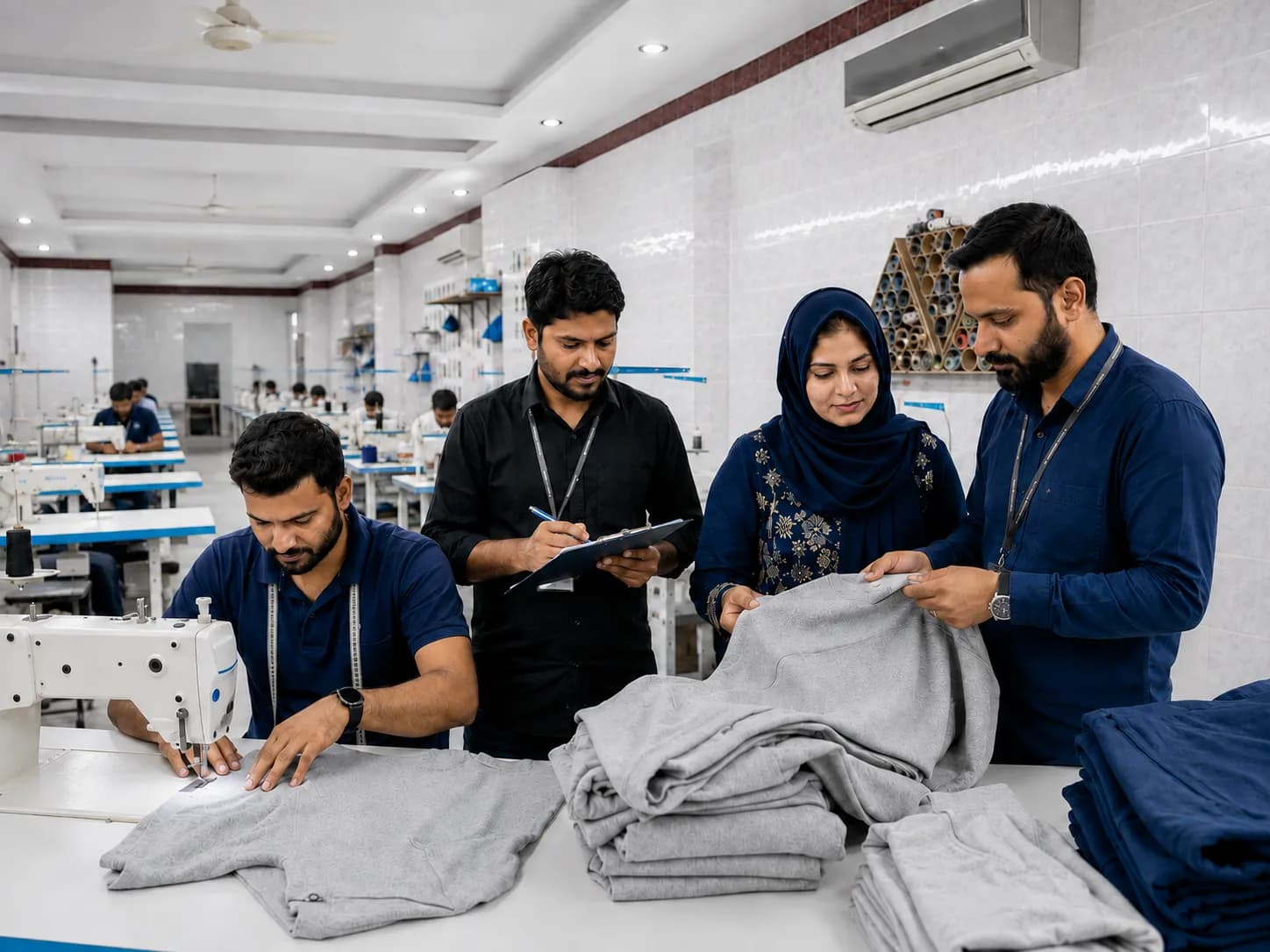
Quality is verified at every stage of production, not just inspected at the end - these are the quality control stages in garment manufacturing that buyers expect.
Fabric, trims, zippers, and labels are checked for shade, GSM, and faults before they enter production.
The approved sample sets the benchmark for fit, colour, and construction the bulk is measured against.
Garments are checked during cutting and sewing at key quality control points (KQCPs) so issues are caught early.
Each finished piece is inspected at the end of the sewing line for stitching, measurements, and finishing.
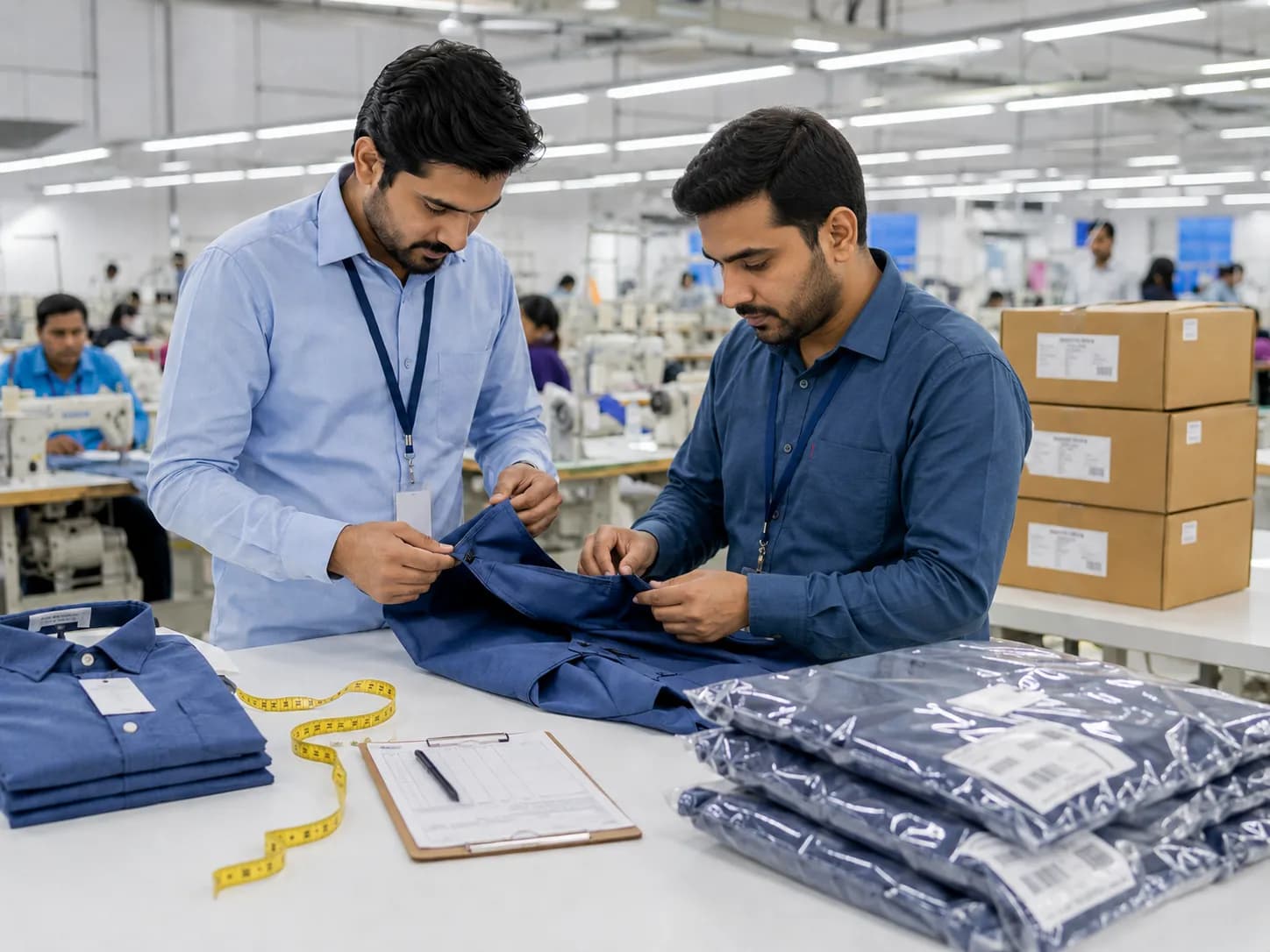
A statistical AQL sample of the finished lot is inspected and defects classified before release.
Packing, labelling, and documentation are verified, then the order is released for export.
This is where our production workflow and quality checks line up - quality control is embedded in the workflow, not bolted on afterwards.
Apparel quality control services are only as good as the standard behind them. Here is how we inspect, sample, and grade defects.
We inspect at four checkpoints - incoming material, inline (during production), end-line, and final pre-shipment - so a problem is caught and corrected before it multiplies across the order.
For finished goods we use AQL (Acceptable Quality Limit) inspection: a statistical sample of the lot is pulled and assessed against agreed levels. This gives an objective pass or rework decision instead of a subjective spot-check, which is exactly what buyers searching for a wholesale clothing manufacturer with AQL quality inspection are looking for.
Critical, major, and minor defects are defined in writing so inspection decisions stay consistent across production and final release.
What it means
Renders the garment unsafe or unusable
How we handle it
Rejected; root cause corrected before continuing
What it means
Affects function, fit, or saleability
How we handle it
Reworked or pulled; counted against AQL limits
What it means
Small cosmetic deviation from the standard
How we handle it
Recorded and reworked within agreed tolerance
Typical AQL levels are agreed with you before production. We confirm sampling plans, tolerances, and defect limits on your quote so the standard is set in writing.
Named standards buyers recognise, covering both product quality and ethical, social compliance. Confirm current certificate scope with our team before publishing.
Quality management system
Tested for harmful substances
Ethical & social compliance audits
Certified organic lines (where used)
These standards back two different promises: ISO 9001 and OEKO-TEX Standard 100 cover quality and product safety, while WRAP, SEDEX, and GOTS cover ethical, social, and organic compliance. We can share current certificates and audit reports during your vendor onboarding.
Responsible manufacturing buyers can stand behind - and document for their own customers.
GenXport runs responsible, audit-ready production. Our facility is set up for buyer audits and third-party social-compliance audits (such as SEDEX SMETA and WRAP), covering fair labour practices, safe working conditions, and traceable sourcing.
Fair-labour and safe-workplace practices verified through social audits
Traceable material sourcing for due-diligence requirements
Responsible sourcing options including GOTS-certified organic and recycled fabrics
Documentation packs that help you pass your own compliance checks
See it in context on our capabilities page and inside the factory gallery.
Audit-ready quality means nothing if the shipment stalls at the port. Our export compliance keeps goods moving.
We run export-ready production with traceable records from fabric to finished carton. Each shipment is supported by accurate packing standards and the documentation importers need, so trade lanes - including the historically important Pakistan-to-USA route and lanes into the UK, Europe, and Australia - clear without surprises.
Production records from incoming material to final pack
Accurate paperwork for smooth customs clearance
Consistent carton marking, ratios, and labelling
Records and access for your vendor due diligence
Where a buyer or market requires it, we support fabric and garment testing so products meet the standard on paper as well as on the floor.
Beyond visual inspection, we support physical and chemical testing - colourfastness, shrinkage, GSM, fibre content, and harmful-substance limits aligned with OEKO-TEX Standard 100. Testing scope is agreed per order; we can coordinate third-party lab testing where your market requires certified reports.
Buyers also search for apparel quality control services and proof of conformance testing before they commit. Our QC, AQL, and testing process is built to answer both - request the detailed pack and we will share it for your due diligence.
A systems-driven manufacturer versus a typical trading-agent route.
Outsourced, limited insight
In-house inline, end-line & final AQL
Often discovered after shipment
Classified & reworked before release
Rarely named or verifiable
Named standards, certificates on request
Hard to verify
Built for buyer & social audits
Inconsistent
Traceable, packing-standard compliant
Outsourced, limited insight
In-house inline, end-line & final AQL
Often discovered after shipment
Classified & reworked before release
Rarely named or verifiable
Named standards, certificates on request
Hard to verify
Built for buyer & social audits
Inconsistent
Traceable, packing-standard compliant
Real outcomes from brands and clubs that rely on GenXport for consistent, audit-ready production.
"Our club needed reliable uniforms with a consistent fit across players. GenXport delivered on time, kept quality steady, and made repeat orders simple."
"GenXport helped us move from tech pack to bulk without surprises. Sizing stayed consistent, QC was clear, and reorders got easier."
"Our club needed reliable uniforms with a consistent fit across players. GenXport delivered on time, kept quality steady, and made repeat orders simple."
"GenXport helped us move from tech pack to bulk without surprises. Sizing stayed consistent, QC was clear, and reorders got easier."
The same QC process and standards back every category we manufacture.
GenXport runs multi-stage in-house quality control: incoming fabric and trim checks, inline inspection during sewing, and end-line and final AQL inspection before shipment. Every garment is checked against the approved sample for measurements, construction, colour, and finishing.
The main stages are incoming material inspection, inline (during-production) inspection at key quality control points, end-line inspection at the end of each sewing line, and a final random inspection using AQL sampling before the order is released for export.
AQL (Acceptable Quality Limit) inspection takes a statistical sample from a finished lot and classifies any defects as critical, major, or minor. The lot passes or is reworked based on agreed AQL levels, so quality is verified objectively before shipment rather than guessed.
Yes. GenXport is built for buyer audits and due diligence, with traceable production records, export documentation, and ethical and social compliance practices, so importers, wholesalers, and brands can pass their own vendor checks.
GenXport works to recognised quality and social-compliance standards including ISO 9001 quality management, OEKO-TEX Standard 100 for harmful substances, WRAP and SEDEX for ethical and social compliance, and GOTS for organic lines where used. Confirm current certificate scope with our team before publishing.
Defects are caught at key quality control points during cutting and sewing, classified as critical, major, or minor, and reworked or rejected before they reach the next stage. A final AQL inspection confirms the lot meets the agreed defect limits before export.
Yes. We run export-ready production with traceable documentation, accurate packing standards, and the paperwork importers need, so shipments to the USA, UK, Europe, Australia, and beyond clear smoothly.
GenXport pairs multi-stage garment quality control with export compliance: inline and end-line inspection, AQL sampling, defect classification, buyer-audit readiness, traceable documentation, and named certifications.