Natural
Cotton, linen, wool, silk, hemp. Soft, breathable, good for everyday wear.

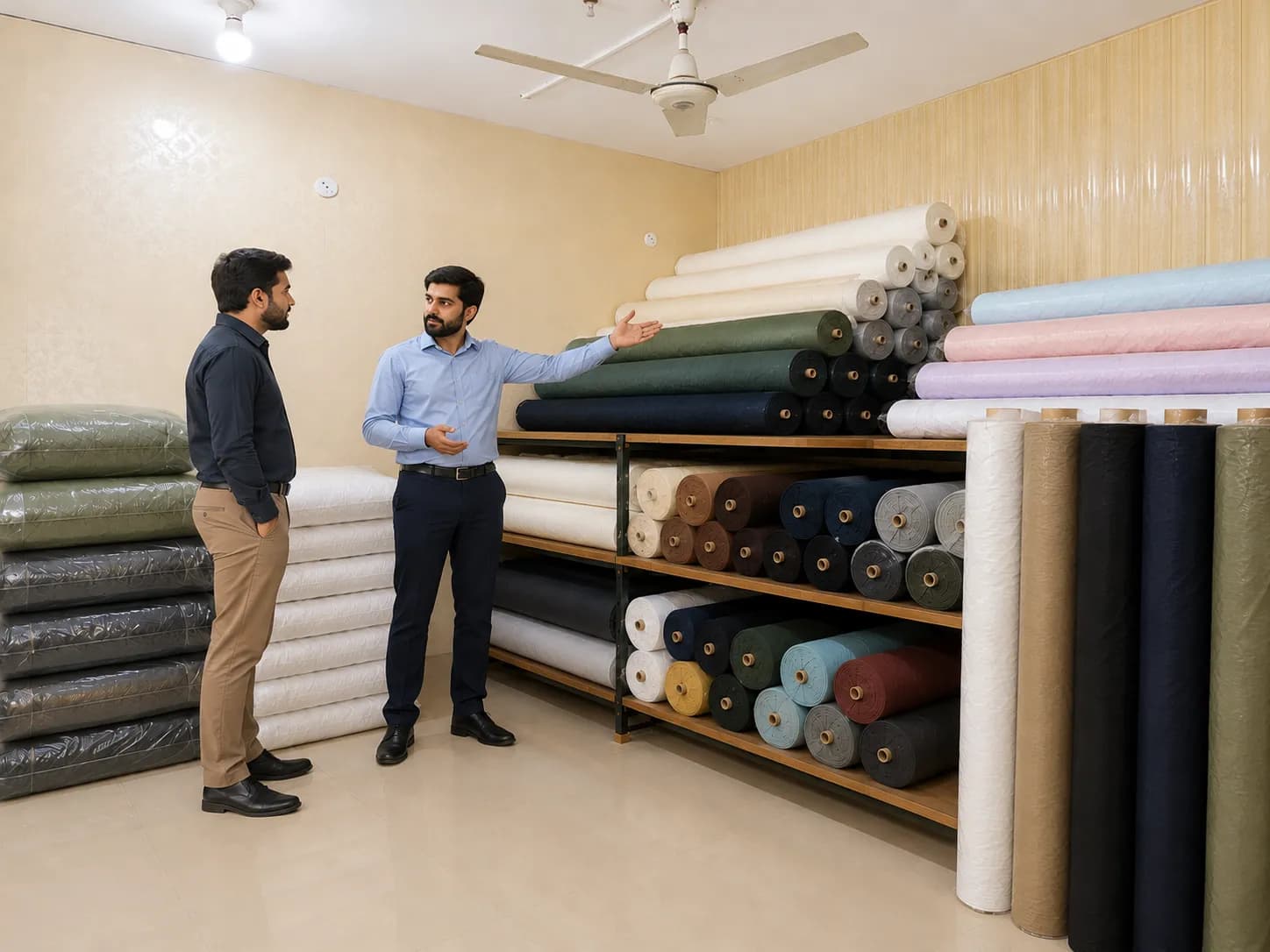
A manufacturer's fabric guides for apparel brands and buyers. Understand fibre types, knit vs woven, GSM by garment, and decoration suitability, so you choose the right fabric before you produce, then request a quote.
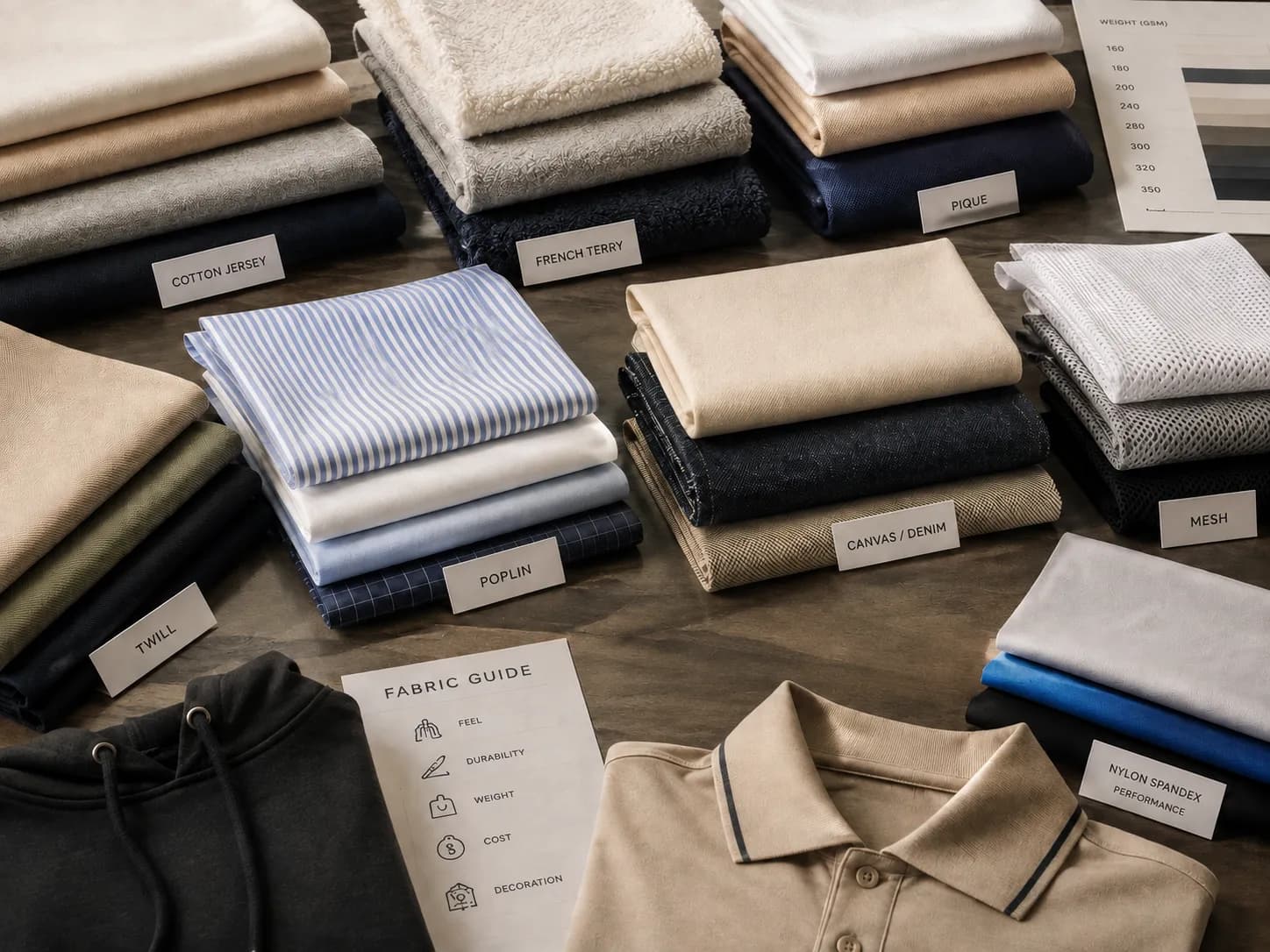
Picking fabric is one of the biggest decisions in apparel manufacturing. The right fibre, construction, and weight set the feel, durability, and cost of your product, and they decide which decoration method will work.
These fabric guides help US brands and buyers choose fabric for real production. Each section links to the product or service that uses it, so you can move from learning to a quote fast.
GenXport runs cutting, sewing, and decoration in-house, so we match fabric to your garment, fit, and budget, then confirm it with a sample.
Fibre source sets the base behaviour of any fabric.
Cotton, linen, wool, silk, hemp. Soft, breathable, good for everyday wear.
Polyester, nylon, acrylic, spandex. Strong, quick-drying, performance-friendly.
Rayon, viscose, lyocell, modal. Soft drape with a natural feel.
Construction decides stretch, structure, and which garments a fabric suits.
| Factor | Knit | Woven |
|---|---|---|
| Construction | Interlooped yarns | Interlaced yarns at right angles |
| Stretch | Natural stretch and recovery | Little stretch unless spandex added |
| Feel | Soft, flexible | Structured, crisp |
| Common fabrics | Jersey, interlock, fleece, french terry, pique | Twill, poplin, canvas, denim, oxford |
| Best for | Tees, hoodies, activewear, polos | Shirts, pants, jackets, workwear |
GSM is grams per square metre. Higher GSM means a heavier, denser fabric.
Use this as a starting reference. Exact GSM depends on the fabric, fit, and feel you want, and we confirm it on a sample.
| Garment | Typical fabric | Typical GSM |
|---|---|---|
| Lightweight t-shirt | Cotton jersey | 140-160 GSM |
| Standard t-shirt | Combed cotton jersey | 160-200 GSM |
| Premium / oversized tee | Heavy cotton jersey | 200-240 GSM |
| Polo shirt | Pique | 180-220 GSM |
| Hoodie / sweatshirt | French terry / fleece | 280-360 GSM |
| Heavyweight hoodie | Brushed fleece | 360-500 GSM |
| Leggings / activewear | Nylon-spandex | 220-280 GSM |
| Workwear / coveralls | Cotton twill | 240-320 GSM |
The fabrics that show up most often in production, and what they are for.
Soft knit for tees and base layers.
Warm knit for hoodies and joggers.
Textured knit for polo shirts.
Durable woven for pants and workwear.
Crisp woven for shirts.
Heavyweight woven for jackets.
Stretch knit for activewear.
Breathable knit panels for sport.
Tell us the garment and look you want. We suggest fabric and GSM, then sample it before bulk.
Functional finishes and eco materials, matched to your line and goals.
Moves sweat off skin for activewear and sport.
Spandex content for movement and recovery.
Airflow panels for warm-weather kits.
Finishes for outerwear and workwear.
Sustainable natural fibre, certified on request.
Lower-impact synthetic for eco lines.
Jump to the product page that uses each fabric family.
Cotton jersey tees in light to heavy weights.
Fleece and terry hoodies for warmth.
Stretch performance fabrics for gym wear.
Durable twill and poly-cotton for workwear.
For more help, see our fabric & size guides, the Resources hub, or all resources.
Direct answers to the fabric questions brands ask before production.
Need fabric help?
Share the garment, fit, and target look. We suggest fabric, GSM, swatches, and sampling before bulk.
GSM stands for grams per square metre, the weight of a fabric. Higher GSM means a heavier, denser fabric. A light tee might be 140 to 180 GSM, while a heavyweight hoodie fleece is around 300 to 500 GSM.
Tell us the garment, the look, and your rough quantity. We suggest fabric and GSM, send swatches, and confirm it with a sample before bulk.
Request a Manufacturing Quote